













Automation from RAN to Cloud
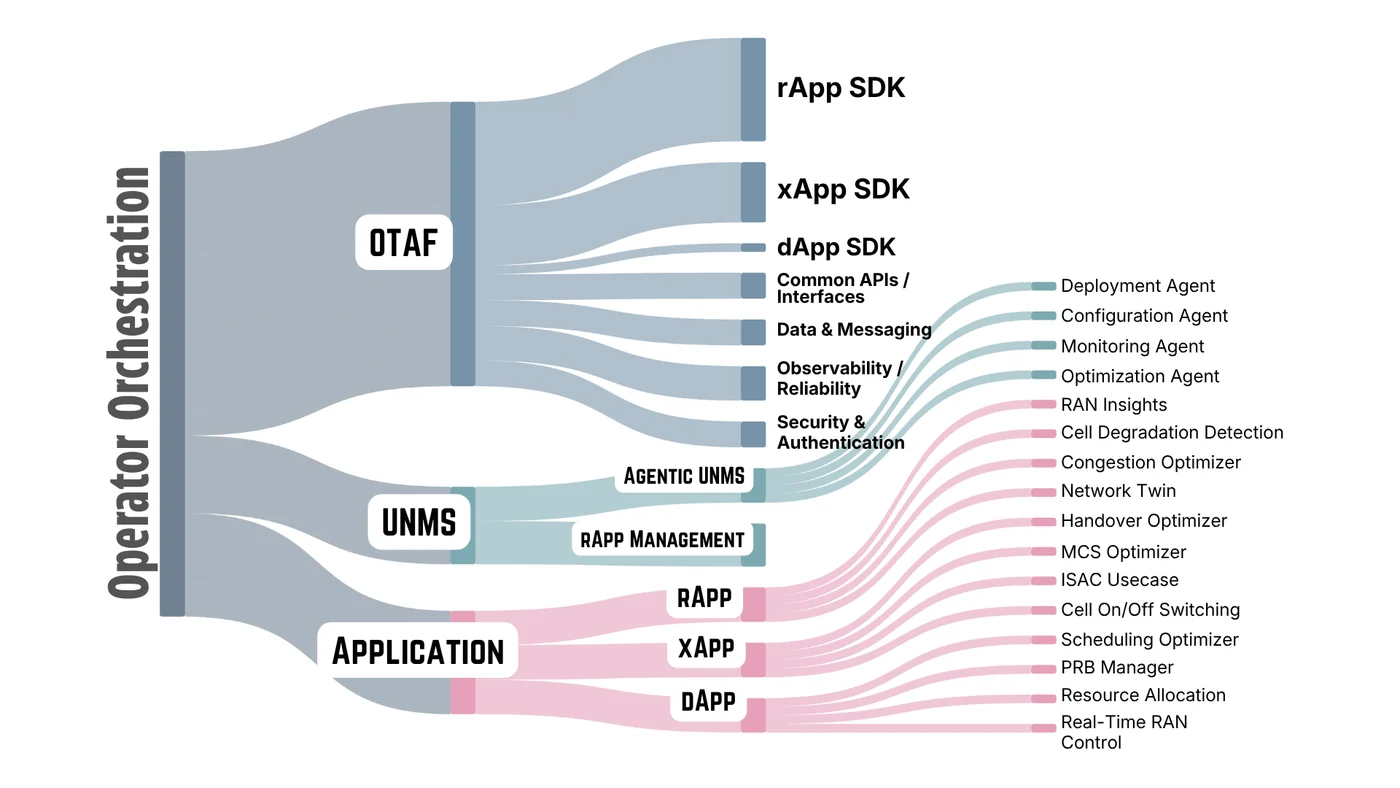
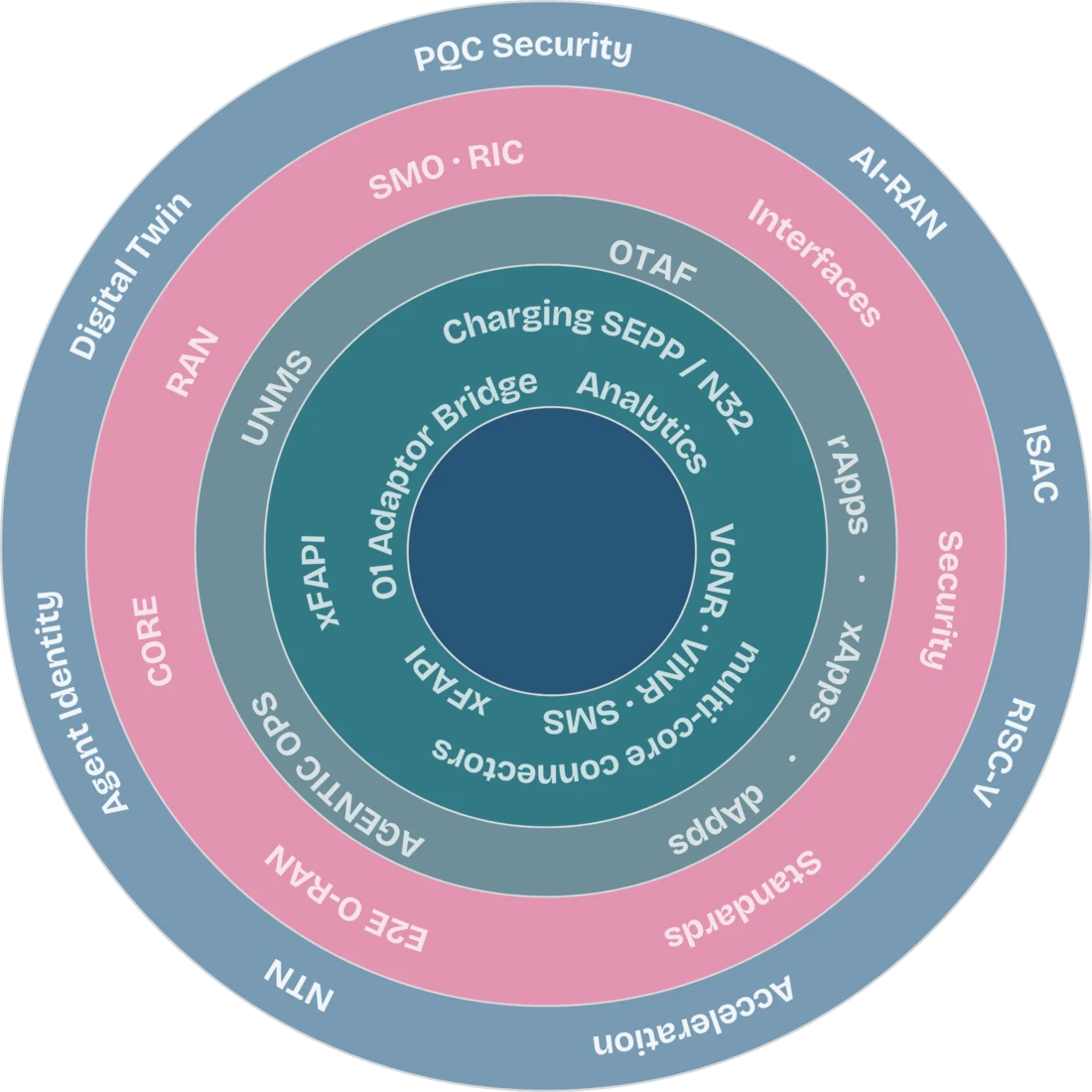
OTAF: service orchestration, policy management, Non-RT and Near-RT RIC, and SMO services over A1, O1, O2 and E2.
DocumentationOpen6Ge brings together the tools, testbeds and technologies developed across the TOSSI ecosystem. From AI-RAN and NTN to ISAC, security, interoperability and certification, each capability addresses a different part of the transition towards intelligent, open and programmable 6G networks.
 Open 6Ge
Open source has come a long way in 5G. There are solid projects for the radio network, the core, orchestration, simulation and cloud infrastructure, and each one does its job well.
What is missing is the network they add up to. Open6Ge puts those projects together into one stack you can deploy, extend and test end to end, instead of a set of parts that only work on their own.
On top of that base, TOSSI is building the technologies 6G will need: AI-RAN, sensing and communication (ISAC), non-terrestrial networks (NTN), digital twins, accelerated computing, post-quantum security and intelligent automation. The hard part was never the components. It is making them work as one network.
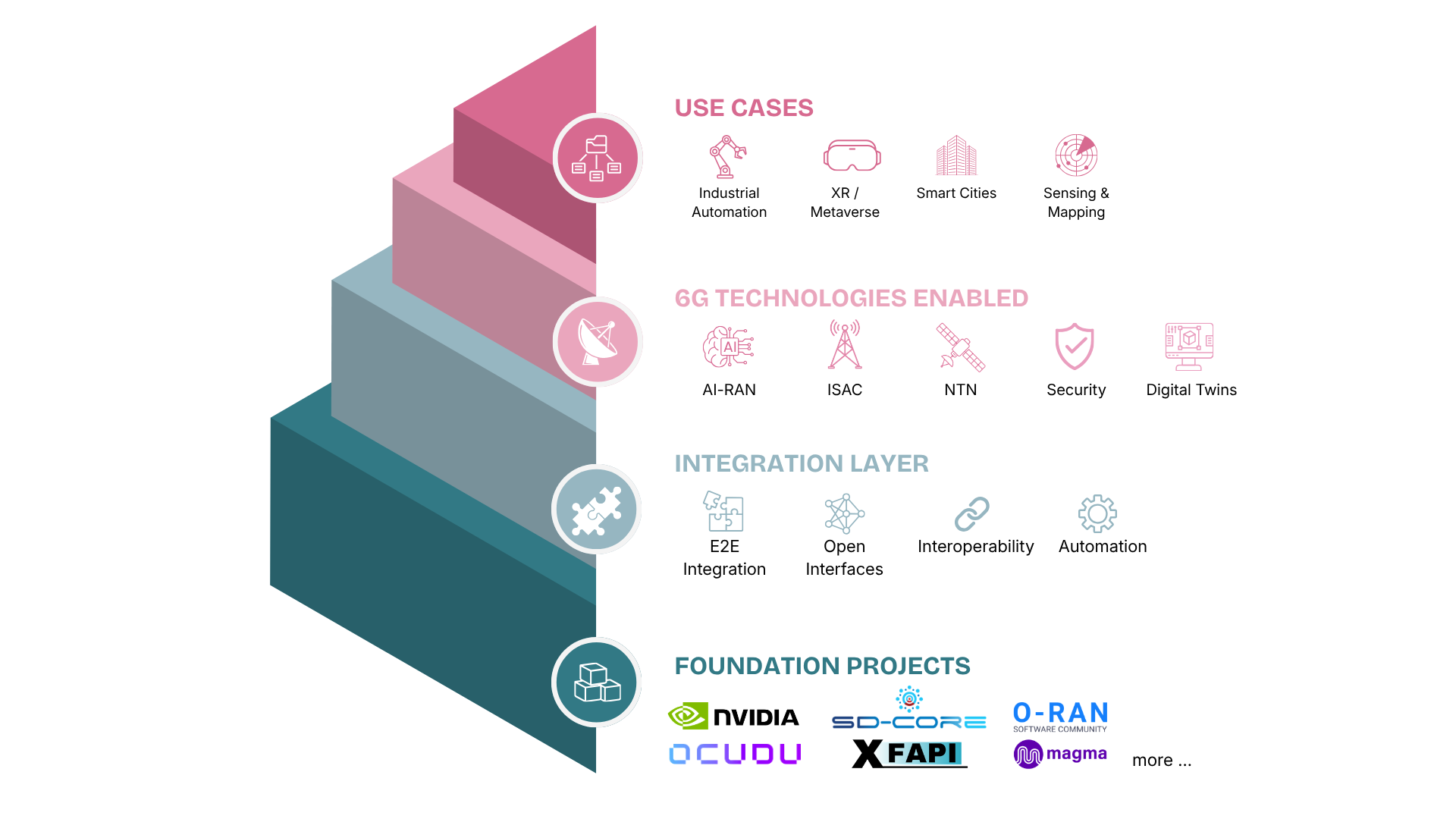
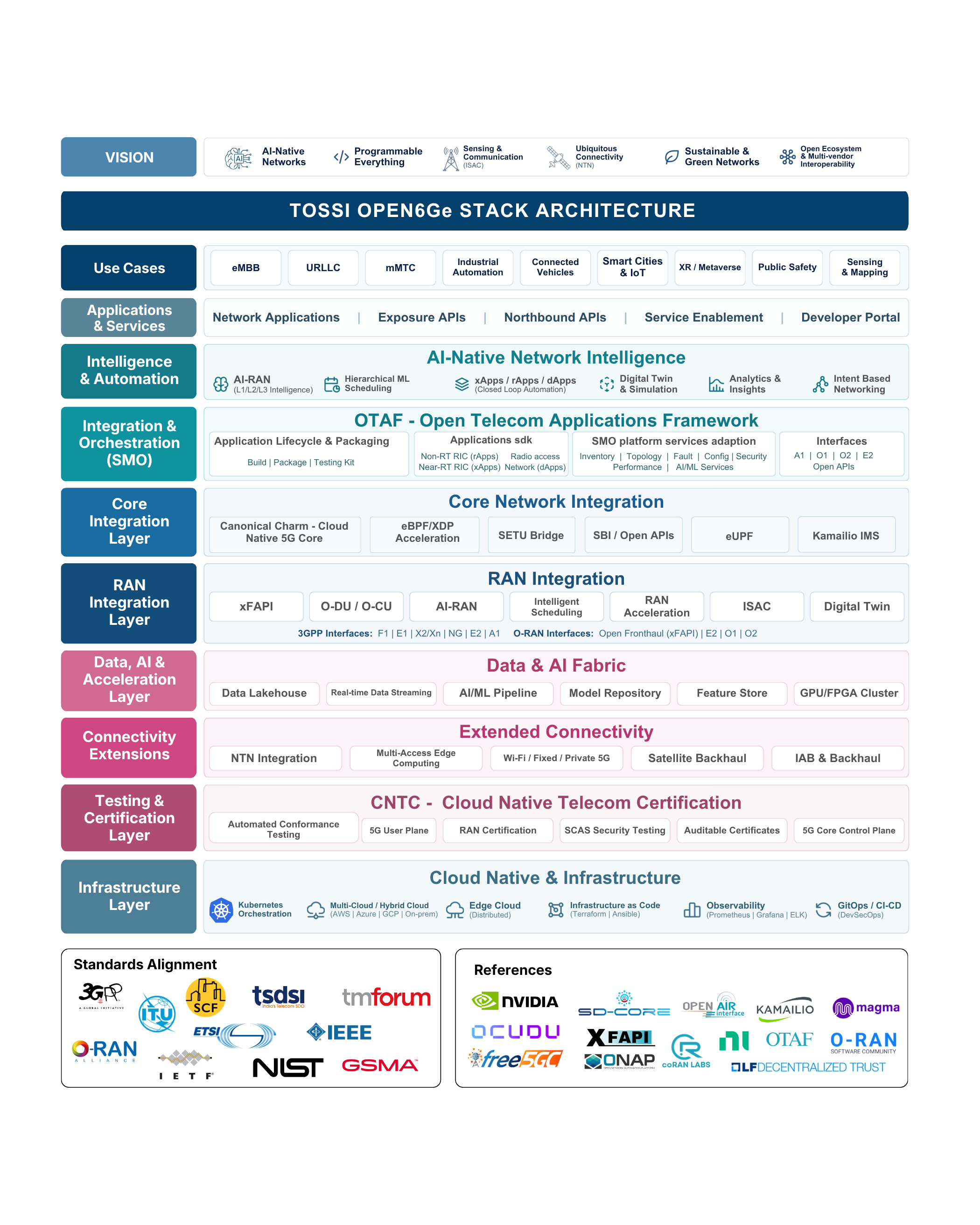
Four layers, each building on the one below. Upstream projects supply the components; the integration layer makes them interoperate; that foundation carries the 6G technologies; and the technologies enable the use cases.
 Open full size ↗
End-to-end orchestration for open, disaggregated networks
Open networks become difficult to operate if every component has to be configured independently. Automation is therefore a core part of Open6Ge. Through SMO, RIC and OTAF - Open Telecom Automation Framework, the architecture supports lifecycle and policy management across RAN, Core and cloud infrastructure.
This allows network intelligence to operate across multiple timescales: Non-Real-Time to rApps, Near-Real-Time to xApps, and Real-Time / RAN-local to dApps. Together they create a hierarchical automation model that can progressively move telecom networks toward autonomous operation.
Open, reproducible certification for cloud-native telecom
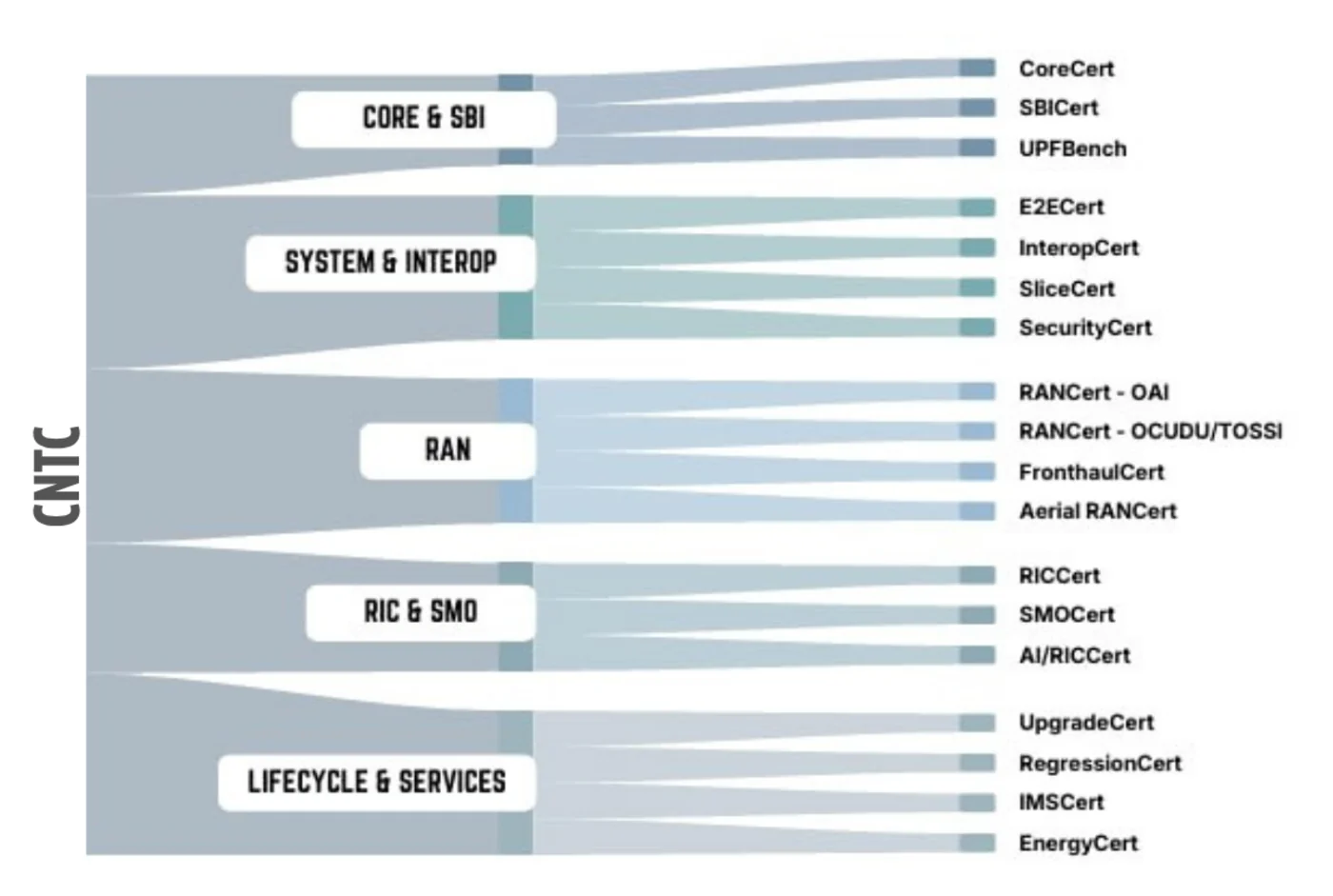
As open systems become increasingly modular and multi-vendor, it becomes necessary to prove that components actually work together. That is where CNTC fits into Open6Ge: it converts telecom and cloud requirements into automated tests, repeatable execution, measurable evidence, graded verdicts and auditable results.
This creates an important progression: Build → Integrate → Experiment → Validate → Certify. Rather than simply demonstrating that a technology works once, the goal is to make results repeatable and reproducible.
Intelligent, predictive and slice-aware RAN
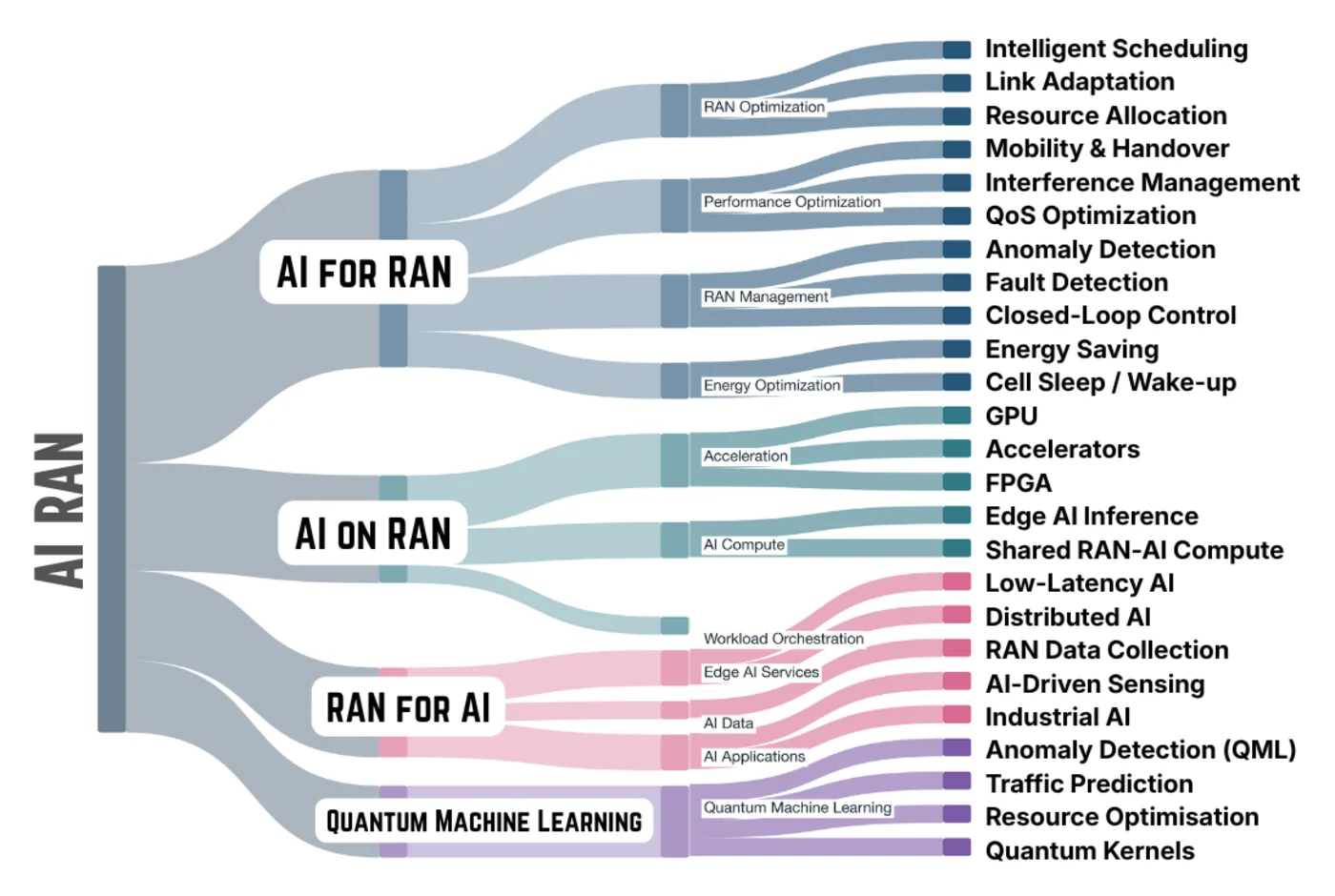
Open6Ge brings AI directly into the RAN scheduler, enabling per-UE intelligence, predictive link adaptation and dynamic scheduling based on real-time network conditions.
Building on TOSSI's OCUDU AI-RAN framework, the stack supports ML-based MCS selection, BSR prediction and CSI prediction, while extending intelligent scheduling towards different network slices with dynamically changing performance requirements and priorities. The approach combines offline training, lightweight in-RAN inference, live model updates and safe fallback to conventional scheduling.
Instead of relying entirely on static scheduling rules, future RAN systems can combine real-time network information with learned models while retaining safe fallback mechanisms. This creates a practical evolution path toward increasingly AI-native radio networks.
End-to-end open testbed for satellite-enabled connectivity
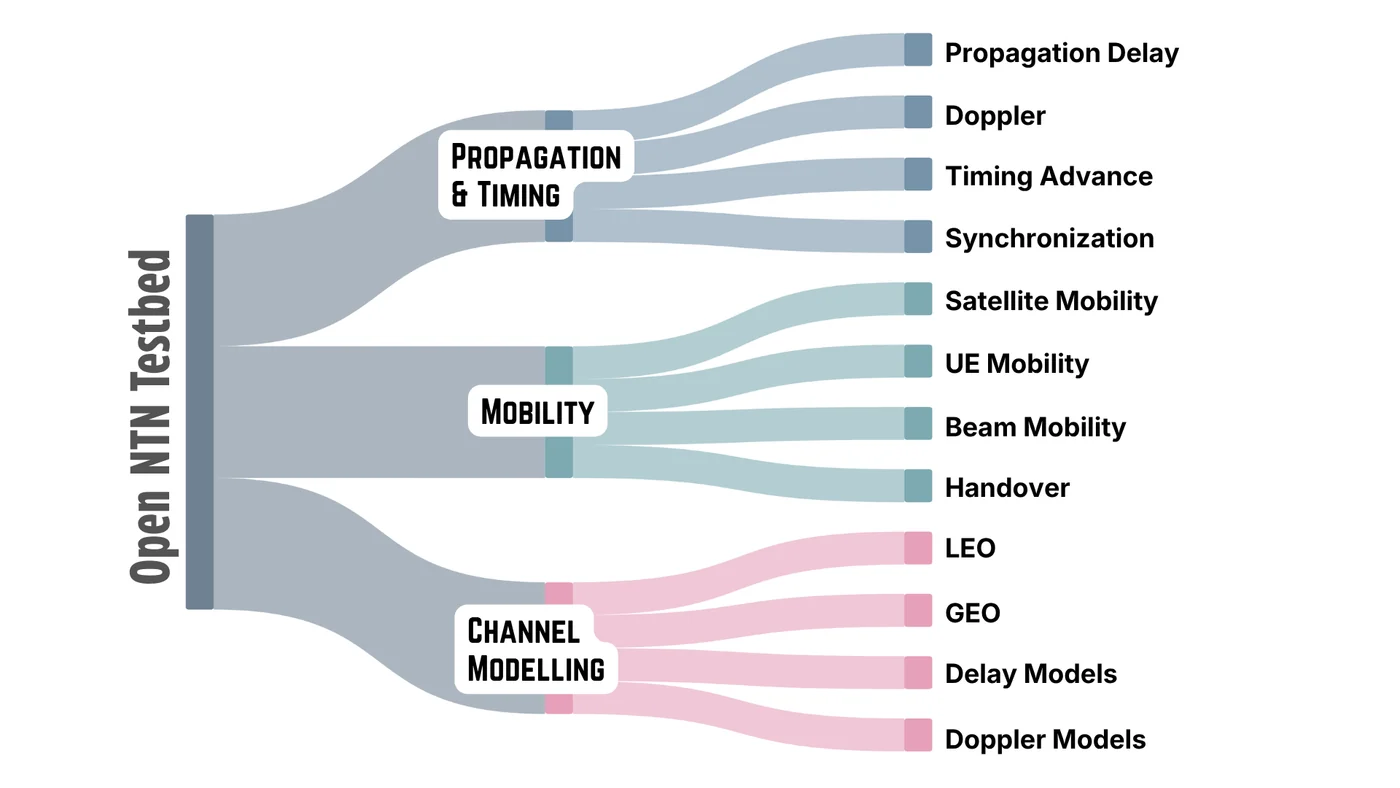
Another major part of the evolution toward 6G is the convergence of terrestrial and non-terrestrial networks. Open6Ge includes an Open NTN Testbed that allows satellite-enabled connectivity to be explored using an end-to-end software environment.
The advantage of a software-based approach is that researchers can evaluate NTN behaviour without always requiring access to dedicated satellite infrastructure. This allows terrestrial 5G systems to gradually evolve toward integrated terrestrial + satellite connectivity.
Identity and authorization for intelligent telecom networks
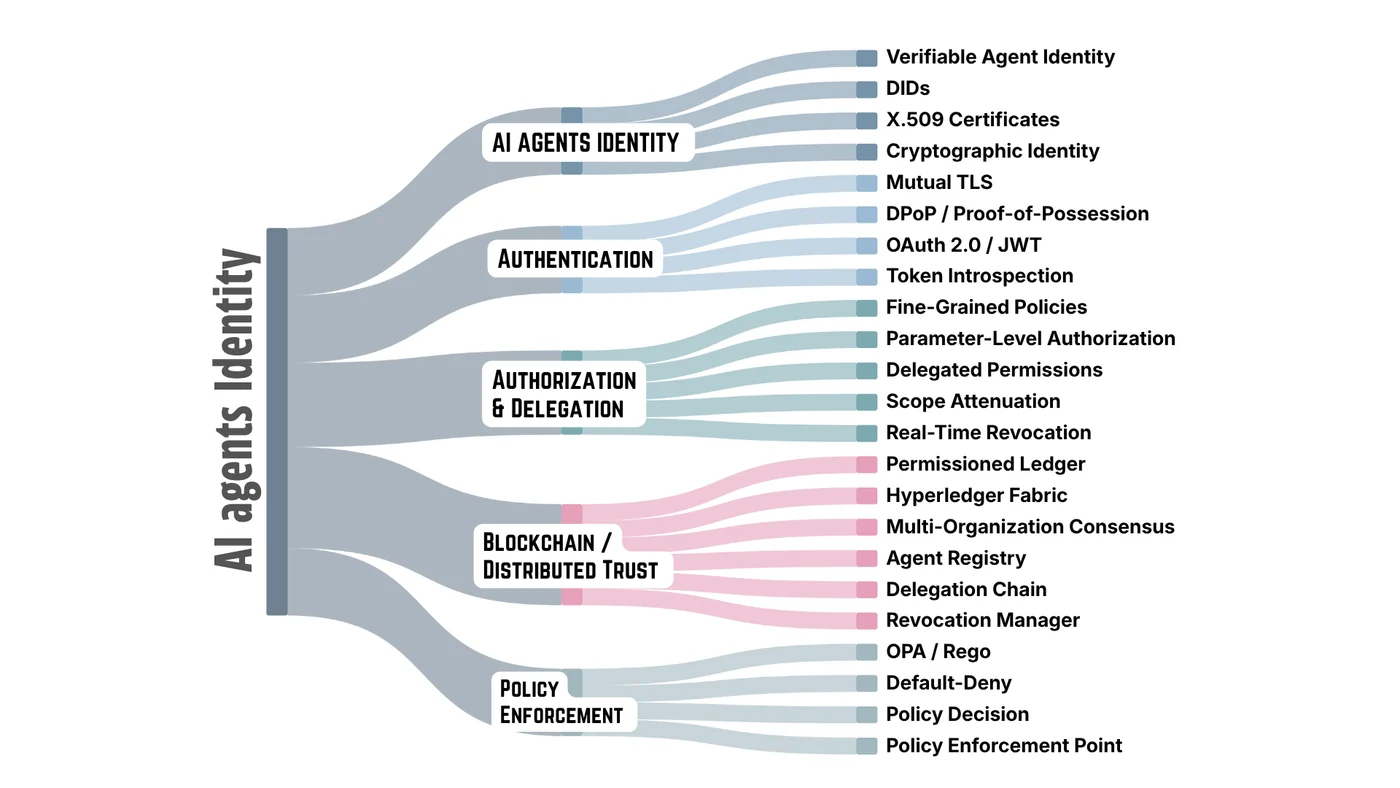
Open6Ge extends AI agents beyond server operations into the telecom network stack, giving agents a verifiable identity and controlled authority to interact with RAN, Core, SMO, applications and infrastructure.
The approach uses cryptographic identity, proof-of-possession, policy-based authorization, delegated permissions and revocation so that every agent action can be authenticated and evaluated before it reaches a network function.
Turning an open 5G network into a sensing system
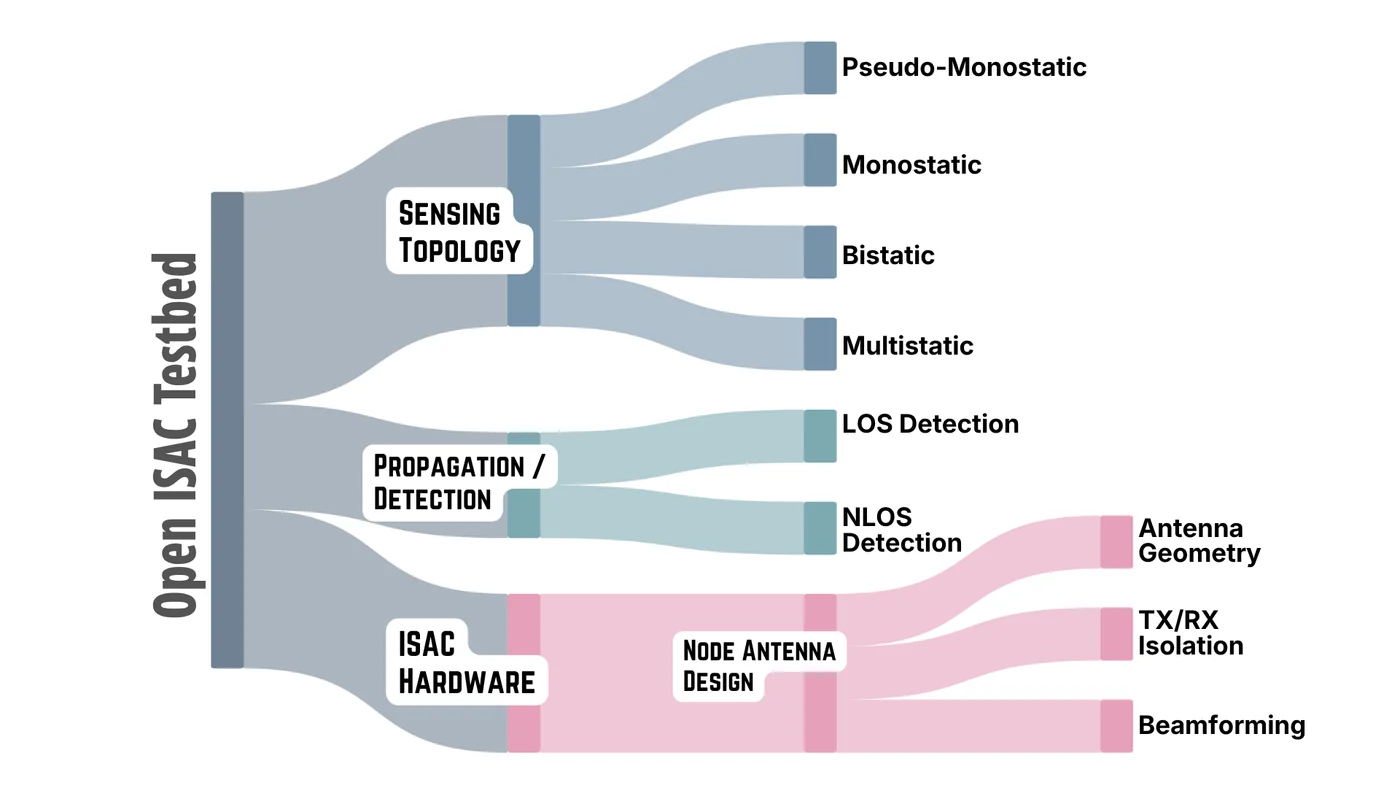
6G is expected to extend wireless networks beyond communication. With Integrated Sensing and Communication (ISAC), the same radio infrastructure used to transmit information can also be used to understand the physical environment. The Open6Ge ISAC environment explores this using 5G NR signals such as CSI-RS to extract sensing information.
This means the mobile network can gradually evolve from simply connecting devices to becoming a distributed sensing infrastructure. Applications could eventually span industrial environments, mobility, robotics, smart cities, public safety and environmental awareness.
Connecting independently developed components through open interfaces
RAN, Core, IMS, transport, orchestration and cloud infrastructure must work together across open interfaces. The Open6Ge architecture therefore includes integration capabilities across both the RAN and Core.
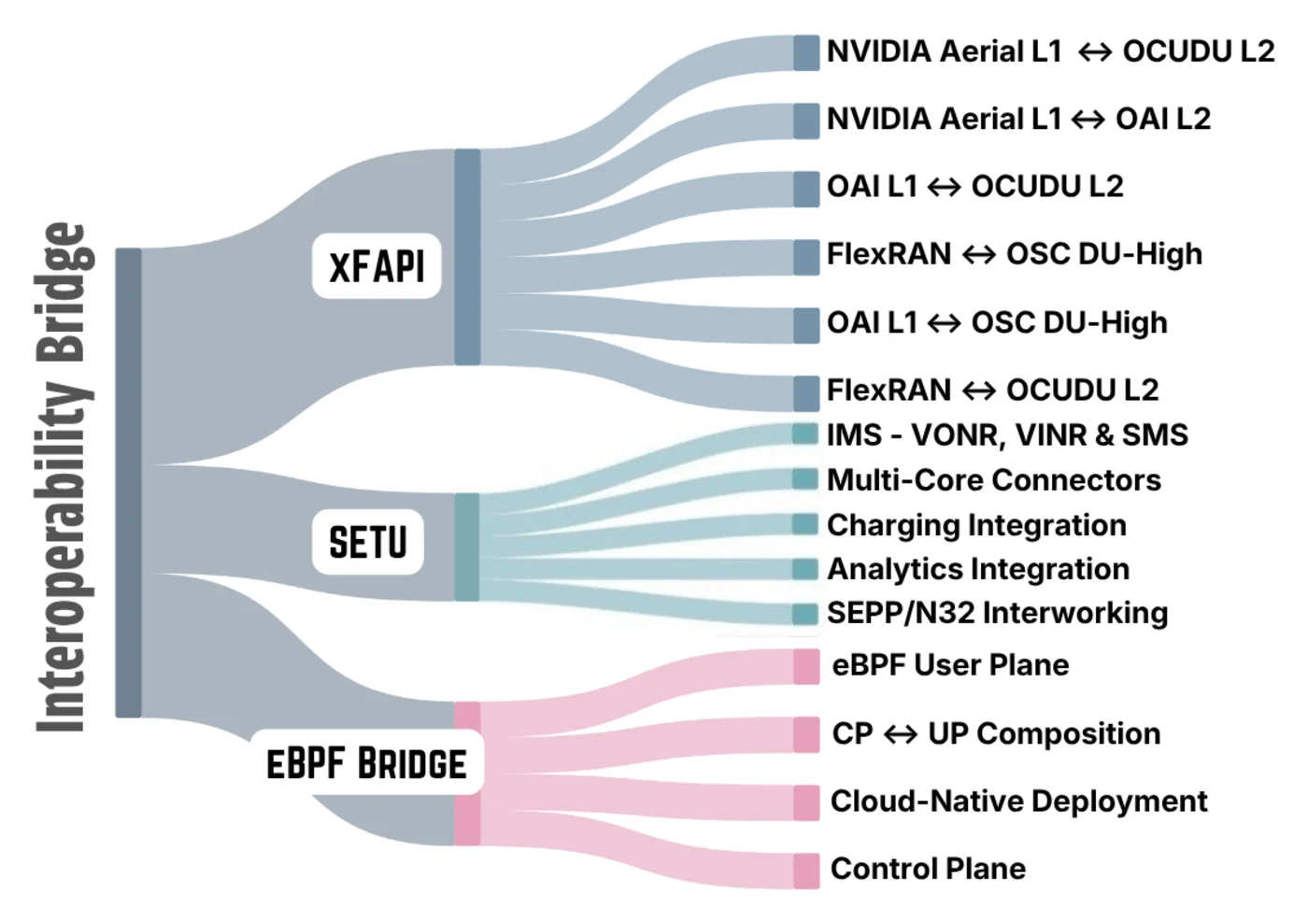
On the RAN side, technologies such as xFAPI can bridge differences between independently developed L1 and L2 implementations, enabling combinations across open and accelerated RAN platforms.
On the Core side, cloud-native network functions, programmable user planes and open APIs provide a foundation for rapid experimentation. Additional interoperability components such as SETU and HEXAeBPF address integration across IMS, multi-core environments, control-plane/user-plane composition and programmable packet processing.
Preparing open telecom networks for long-term security
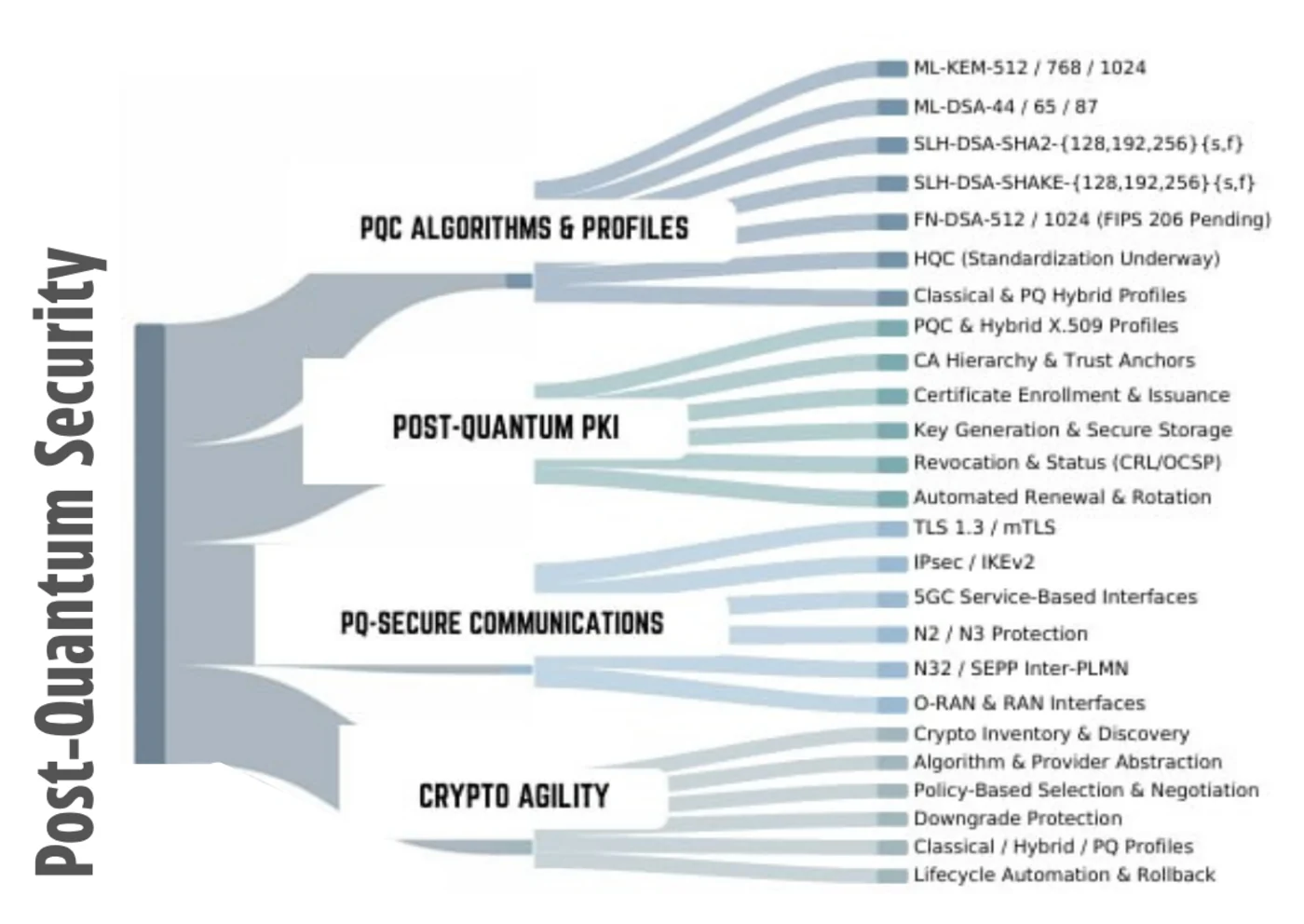
6G infrastructure being designed today may remain operational for decades. Security therefore needs to consider not only today's threats, but also the long-term impact of quantum computing. Open6Ge integrates post-quantum security across the telecom architecture.
An important principle here is crypto agility. Networks should not be tied permanently to one algorithm. They need the ability to discover deployed cryptography, select policies, migrate between classical, hybrid and post-quantum profiles, manage certificates and keys, and prevent cryptographic downgrade. That capability will be critical for any long-lived 6G infrastructure.
Building an open hardware and software foundation for next-generation telecom
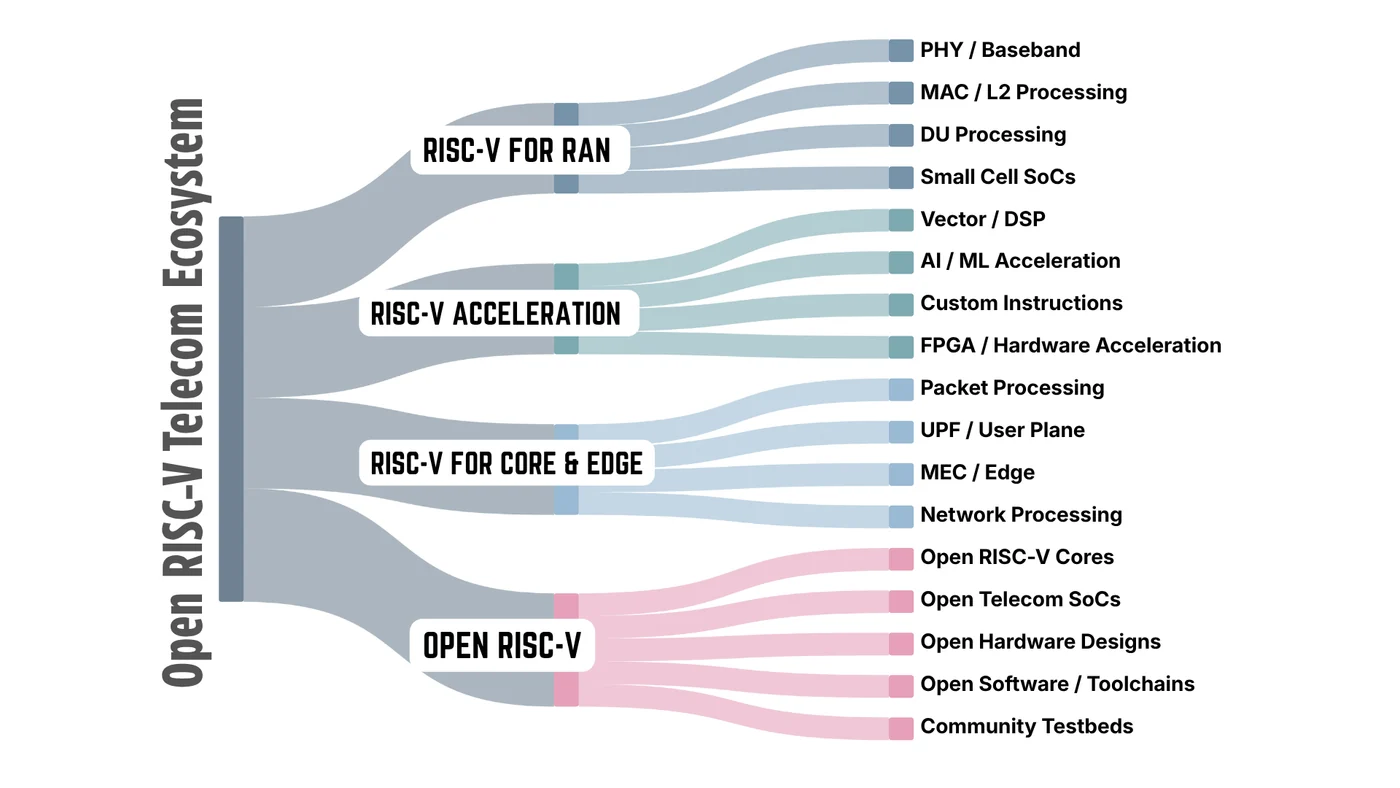
The evolution toward 6G is not only about software. Future telecom infrastructure will also require increasingly specialized compute architectures. Open6Ge therefore explores RISC-V as an open and customizable computing foundation for telecom.
The combination of open software with open compute architectures could allow the telecom community to experiment with new accelerators without being permanently tied to proprietary processor architectures.
Model, simulate and optimize
Creating digital representations of network and radio environments to evaluate configurations, algorithms and new technologies before deployment.
The Digital Twin platform simulates the whole stack - radio, propagation, orbits, and the data that trains the models. Site-specific propagation comes from 3D scenes through Sionna RT ray tracing, NTN scenarios cover LEO and GEO orbits, and multi-UE RF simulation runs many nr-UEs on one gNB over a simulated radio with no RF hardware needed.
Labelled per-UE, per-slot datasets are captured straight from the twin, so models can be trained on twin data, replayed on held-out scenarios, then deployed with a safe fallback.
The most important principle behind Open6Ge is openness. It is not intended to become another closed telecom stack.
Open 6Ge is built on open-source projects, open interfaces, and established industry standards. It provides a modular foundation that enables the community to integrate existing technologies, develop new capabilities, and contribute improvements back to the broader open-source ecosystem.
Contributions and enhancements are developed in alignment with upstream projects and the wider open-source community, rather than diverging from them.
There is still significant work ahead before 6G becomes a commercial reality. But we do not need to wait for a final specification before building the environment needed to explore those technologies.
Open 6Ge: Evolving Open 5G and 5G-Advanced Towards 6G
The journey to 6G should be open, evolutionary and reproducible.
Integrate · Evolve · Accelerate · Automate · Validate